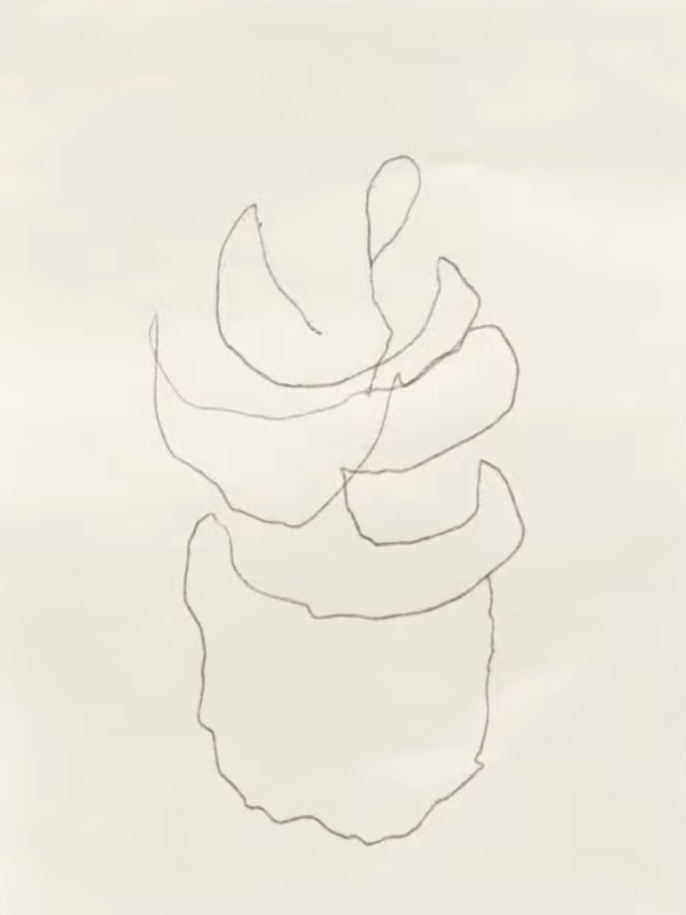
The images show Agnes Martin’s final drawing. There are notebooks preserved containing her calculations for enlarging images from her imagination, from postage stamp-sized to life-size paintings. The dialogue between process and control is clearly visible in her life and work.
My studies are planned accidents, deliberate mistakes. Let’s remember and discuss: were they truly intentional? Are they accidents? Should we accept the coincidences that have occurred, or allow them to be? This is something I find interesting to reflect on. It can seem very confusing; it’s an argument, a discussion.
I’m learning to let go; there are things we can’t control. I’m trying to understand where this letting go occurs — I create an opportunity based on intention; there’s a difference between intention and purpose. You have to be open to possibilities and receive the message through a sense of reluctance. This type of art serves as a kind of documentary evidence. The work begins with planning, and then I allow the process to take its course and create its own life; the material tells its own story.
The story has its origins. This looks like an investigation. What causes this drift? This award hasn’t been given to anyone yet, it doesn’t belong to anyone. It tells us that we were there that day. Understand what happened and let it go. That’s the beauty of something that happens instantly. It significantly simplifies the workflow. This experience allows us to see beauty in our own way; in a sense, it allows us to see the truth, it teaches us to calm down. The goal of the work process isn’t to control everything, but to appreciate the natural flow of events, something in itself.
Sources
Jennie C. Jones. Jennie C. Jones on Agnes Martin. (video) New York: Dia Art Foundation, September 22, 2015
Nancy Princenthal. Agnes Martin: Her Life and Art
Jill Johnston. Agnes Martin: Surrender and Solitude